
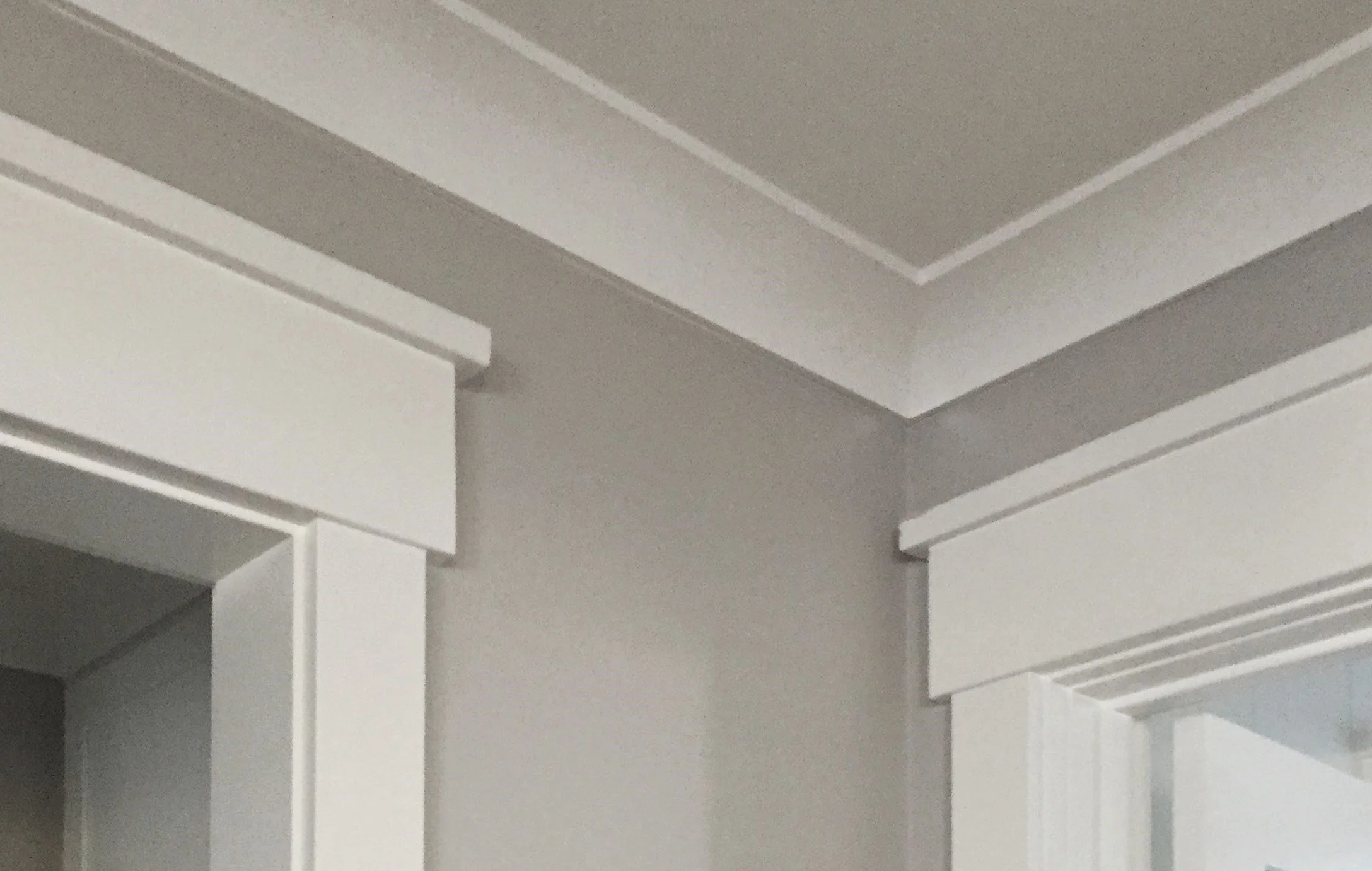
Scribing Multi-Piece Crown for Humidity Movement
Kansas weather violently swings from 90 percent humidity in July to bone-dry indoor air in January. If your crown molding joints are merely butt-cut and nailed together, that inevitable structural movement will cause the seams to pop and open up. When executing custom finish carpentry, I refuse to install temporary cosmetic fixes. To combat crown moulding seasonal expansion scribing and advanced joinery are absolute necessities. I demonstrate exactly how we cope inside corners and scarf long joints to ensure your multi-piece trim remains tight and visually flawless year-round.
Coping Inside Corners for Continuous Movement
Standard production carpenters typically cut quick 45-degree miters for inside ceiling corners. When the house naturally breathes and humidity shifts, those simple miters instantly pull apart and expose dark, cracking gaps. We build with intention by coping our inside joints. My team cuts the exact profile of the molding into the adjoining piece, allowing the trim to overlap and slide slightly during seasonal shifts without ever revealing a visible seam. This level of behind-the-wall engineering accommodates structural movement while maintaining strict cabinetmaker tolerances.
Scarfing and Scribing Long Runs
Multi-piece crown build-ups require long, continuous runs of lumber across wavy, out-of-plumb ceilings. We do the hard prep work behind the walls right the first time by measuring the exact topography of your room and hand-scribing the top edges to sit completely flush against any drywall or plaster imperfections. For wall lengths that exceed a single board, we utilize glued and cross-pinned scarf joints. Cutting these long splices on an overlapping 45-degree bevel ensures the two pieces expand and contract as a single monolithic unit rather than splitting apart.
Dimensional Stability and Material Selection
Master joinery is only permanently effective when paired with high-performance materials. We specify WindsorONE architectural millwork because every stick arrives dead straight and features an industry-leading prime coat. This precision manufacturing relieves internal grain tension, providing a reliable, flat plane that resists the twisting and warping commonly seen in inferior raw lumber. Furthermore, these products achieve an SCS Gold Indoor Air Quality Rating, perfectly aligning with my strict clean-living protocols for your home environment.
Writing a substantial check for a custom interior means you should never have to patch cracking ceiling seams a few years down the road. We engineer your custom finish carpentry to permanently honor your home equity, elevate your architectural stewardship, and completely eliminate future displacement stress.
What specific ceiling heights or historic molding profiles are you looking to integrate into your upcoming renovation? Contact Dash Farr today to schedule your pre-construction project consultation.